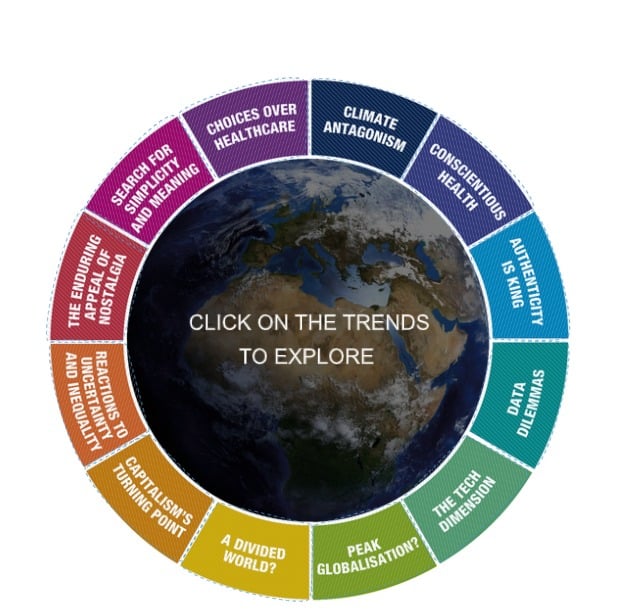
Food is at the interface of science, culture, economics, and personal identity in ways that many other aspects of our daily living can rival. What people eat, from where it comes from, how it's manufactured, and what it can do to our bodies is a subject that draws an increasing amount of attention each new year. The current landscape of nutrition and food of 2026/27 has been shaped through innovations in science and technology, rising awareness of the environment, a shift in preferences of consumers, and a technology sector which has recognized food as one of most important change opportunities in the coming decades. Here are ten food and nutrition trends you should to be aware of in 2026/27.
1. Personalised nutrition moves from the concept to practiceThe idea that optimal nutrition will differ for different people in accordance with genetics Microbiome composition, metabolism and lifestyle factors has been gaining ground in scientific literature for some time. In 2026/27, the tools to implement that notion are becoming more accessible than specialist health clinics as well as elite athletes. These platforms for the consumer that include genetic tests continuously monitoring glucose levels, microbiome analysis and AI-driven dietary advice are gaining ground in more mainstream markets. The one-size-fits-all diet guideline is no longer in existence, but is increasingly being supplemented by suggestions that are adapted to the particular rather than the common.
2. Gut Health is still the primary focus of Mainstream Nutritional ThinkingThe gut microbiome (the large microorganisms community that dwells in the digestive system has been one the most researched areas disciplines of nutrition and the findings continue to ripple outward to influence how people think about their food choices. Links between gut health and physical wellbeing, immunity metabolic health, and inflammation have pushed fermentation of foods, dietary fiber and probiotic products from health food store staples to mainstream supermarket priorities. The understanding of the gut health of consumers is only a fractional understanding and the market for supplements especially is vulnerable to over-proclaiming, however the research is solid and growing.
3. The plant-based diet matures and diversifiesThe initial series of plant-based meat substitutes which were developed to replicate the flavor and texture of traditional meat in the most exact way developed to become a much more diverse array. Whole food, plant-based diets, that is based around legumes, vegetables including grains, nuts and seeds in their less processed forms, is growing alongside the continuous development of more sophisticated alternative proteins. Motives are shifting too. Environmental impacts, health benefits as well as animal welfare all come into play typically in conjunction. Food choices based on plants in 2026/27 are not a single lifestyle idea and more of spectrum that a growing proportion of people are involved with in varying levels.
4. Protein Demand Drives Innovation Across Multiple CategoriesProtein is now the most commercially powerful macronutrient in the food sector, and the race to meet the rising need for it is generating innovation across an unusually wide range of products. Precision fermentation, which makes use microorganisms and bacteria to make animal proteins without animal products process, is growing. Insect protein, still navigating large cultural resistance on Western markets, has found acceptance in certain food processing applications. Proteins derived from algae, single-cell protein generated from agricultural waste and the development of more legume-based alternatives are all part of a diverse protein which reflects an environmental imperative as well as a commercial chance.
5. Ultra-Processed Food Faces Growing Regulatory PressureThe research that links high consumption of foods that are ultra-processed to a wide range of adverse health outcomes has accumulated until the point where regulatory responses are beginning to follow. The warning labels, the restrictions on advertising especially targeted at children and school nutrition standards, and public health initiatives specifically targeting ultra-processed foods are all getting momentum across several countries. The food industry is responding to the changing times with reformulation efforts that vary in degree of sincerity. Consumer awareness concerning the category of foods that are ultra-processed is increasing, even if behavior change is difficult to attain. The direction in which policy-making is headed is evident, even if the pace of change is debated.
6. Food Waste Reduction Becomes A Serious PriorityThe majority of food that is produced worldwide is wasted or wasted. This is a massive environmental, financial and ethical lapse. In 2026/27, the issue of the issue of food waste is attracting a lot of attention from governments, retailers as well as food service operators and even technology developers. Food prices that change as they approach its use-by date Demand forecasting based on AI that reduces the amount of food produced, apps for connecting surplus food with charity and consumers, and packaging innovations that extend shelf life are all contributing to a measurable shift. For consumers, normalising imperfect produce and planning meals with greater care and eating more efficiently are all simple actions which can have a significant impact on a larger scale.
7. Functional Foods & Beverages Go MainstreamDrinks and food products that provide specific health benefits that go beyond basic nutrition have moved well beyond the aisle of health food. Cognitive function as well as sleep quality control, stress management support and energy with no crash of traditional stimulants are all targets for the majority of food and beverages including adaptogens and nootropics specific minerals and vitamins and bioactive components. The line between food, supplement and pharmaceutical is becoming blurred in several categories, raising questions about evidence guidelines, regulatory oversight and the extent to which claims regarding functional effects are proved. However, the appetite of consumers remains unabated.
8. Local And Regenerative Food Systems Attract Renewed InterestGlobal food supply chains demonstrated great fragility during recent times of chaos, and the response has included a renewed interest in shorter, less robust community-based systems of food production. Farmers markets, community-based farming schemes as well as direct-to-consumer food business have all risen. Alongside localism, regenerative agricultural, farming practices designed to improve the health of soils, improve the diversity of the soil, and also sequester carbon rather that merely sustain yield, are drawing significant public and private investment. The challenge is scaling these methods without losing what makes them attractive as well as that's one of major questions for the food industry over the coming decade.
9. AI And Technology Transform Food Production and Food SafetyArtificial Intelligence is being used across the food supply chain in ways that are beginning to see tangible results. Precision agriculture with AI-driven analysis of satellite imagery soil sensors weather data are boosting yields while cutting down on input. AI-powered food safety monitoring is detecting contamination and quality issues faster than traditional inspection methods. In the process of developing products, AI is accelerating the identification of new ingredient combinations, flavour profiles as well as formulations that would require years of development using traditional trial and error. Food industry is a technology-driven sector in ways that are not evident to the public, but change the efficiency and safety across the entire supply chain.
10. Mindful And Intentional Eating Challenges Diet CultureThe world is witnessing a major shift going on in the ways people relate towards food on a mental level. The long dominance in diet culture and its emphasis on restricting food intake of calories and moral judgments about food choices, is being challenged by new approaches that emphasize more attunement to hunger signals, pleasure, variety, and a non-punitive relationship with eating. Intuitive eating, mindful eating practices, as well as wider rejection of the restriction and guilt cycle are gaining popularity in the mainstream, especially among younger generation who grew into a culture that has more public discussions regarding the link on the subject of eating disorder and diet. The change has its own complexities. However, it's a significant improvement regarding how health and food are framed together.
Food and nutrition in 2026/27 are in a state of being simultaneously with scarcity and abundance as well as with the awe-inspiring scientific possibilities and the inscrutable reality of culture, habit and economic limitations. The above trends do not suggest a singular, unified food system for humanity however they do suggest a direction toward more personalization, a greater commitment to the environment and a healthier relation between the food we consume and the way we feel about eating it. For additional information, head to some of these respected przegladpunkt.pl/ and find trusted analysis.
 The Top 10 Career Trends Driving The Future Of Work In 2026/27
The world of work is experiencing one of the most important change in human history. Artificial intelligence and automation change the ways in which jobs require the involvement of humans and which not. The geographic distribution of work has been shifted by hybrid and remote systems that have decoupled employment from the location in ways that are still in play. Skills that employers are most seek are changing faster that educational institutions are able to reflect. The relationship between individuals and organisations is transforming away from the traditional mutual commitment model towards something that is simpler, more flexible, and more negotiated and dependent on continual evidence of value. Here are the ten career change trends that will affect the career market that will take place in 2026/27.
1. AI Literacy Becomes A Universal Professional RequirementThe ability to efficiently work alongside AI tools is quickly becoming a requirement for professionals across all industries rather than being a niche skill limited solely to tech roles. Understanding what AI can and cannot do reliably or effectively, how to formulate effective workflows and prompts, knowing how to critically assess the outputs generated by AI and integrate AI tools into your professional practices effectively are all areas that employers are now treating as essential instead of optional. The most successful professionals aren't necessarily the ones who are able to comprehend AI more deeply on a technical level, but rather professionals who can combine solid understanding of the subject with an capacity to make use of AI tools efficiently within their specific field.
2. Skills-Based Hiring Displaces Credential Based SelectionAn increasing number of employers are shifting away from using qualifications for education as the primary filter in hiring decisions to rely on demonstrable skills and capabilities. The recognition that a degree awarded by a particular institution is a less accurate representation of the abilities needed for the job is driving companies to invest in competency assessments for portfolio-based recruiting, work samples, and competency frameworks to assess what candidates are actually able to accomplish, rather than their qualifications. To individuals, this provides both an opportunity and a responsibility: the possibility to stand out on the basis of proven ability regardless of background in education, and the responsibility to improve the capability and show it continuously.
3. A Half-Life Of Skills Shortens DramaticallyThe rate at the which specific tech skills are becoming obsolete is becoming more rapid, driven principally by the pace of AI development, but also due to the broader velocity of change across industries. Skills that were considered competitive five years ago are now common expectation today, while those in the present may be automated or replaced in the same amount of time. This is causing a profound change in the manner that career development should be approached, shifting away from the notion of acquiring a fixed body of expertise and trading on it for decades to a method of constant learning, regular assessments of skill levels, and making sure that you are ahead of where demand shifts rather than the place it was.
4. Portfolio Careers, Non-Linear Paths, and Portfolio Careers Become MainstreamThe idea of a linear career progressing through a single business or even just a single field through entry level until retirement is no longer the reality of how of people's careers actually play out and is losing its status as the ideal default. Portfolio careers combining multiple sources of income, freelancing alongside employment, continuous shifts between various fields, as well as extended breaks for education in caregiving, education, or personal development are becoming more widespread and are increasingly accepted among employers who've learnt to interpret diverse careers to show adaptability rather than insecurity. The ability to present a coherent narrative connecting varied knowledge and experience is increasingly a necessary professional communication skill.
5. Remote And Distributed Work Reshapes Career GeographyThe geographical limitations regarding career advancement have been relaxed substantially for positions that can be carried out remotely, but it is still evolving. Individuals working in smaller cities or regions are now able of accessing roles or companies that have required relocation. Talent markets have become more competitive, as employers hire worldwide rather than locally for various positions. The career advantages of being physically present in major professional places have diminished for a few tasks, yet they are important for other positions. How to navigate the geographic landscape of an occupation in a multi-faceted world choosing when proximity is crucial or not and how to preserve awareness and develop opportunities in scattered organizations, is key and recent professional ability.
6. Personal Branding Becomes More Than Optional To EssentialThe visibility of an expert's knowledge, experience and track record that extends beyond the boundaries of their current employer is now an important career asset in ways which would have been only the case for a small portion of those in previous generations. Making a name for themselves through content creation through public speaking and involvement, and an active presence on professional networks gives assurance against changes to the organisation and an opportunity to expand your career that internal growth does not. This doesn't require you to be a social media personality. However, developing enough external visibility in order to have opportunities or collaborations arrive at you independently of any particular employer has become standard career guideline rather than an additional added benefit for those who are particularly ambitious.
7. Emotional Intelligence and Human Skills Command is a mustAs AI assumes more of the cognitive tasks that used to require human expertise, the capacities that are still uniquely human get a higher value in the world of work. Emotional intelligence, the ability of being able to read, comprehend, and effectively respond to emotions within oneself and in others, can be among the top consistently highlighted differentiators in roles that require management, client relations, negotiation, team management and sophisticated communication. Creative thinking, ethical judgement as well as the ability to negotiate uncertain waters, as well as the capacity to establish trust are just a few of the capabilities that AI can augment rather than duplicate. Professionals that combine strong understanding of the domain and technical aspects together with well-developed human abilities are in the most defended sector recommended reading of the workforce.
8. Wellness and Psychological Safety have become Retention ImperativesThe determinants of talent's decisions have been shifting significantly towards being satisfied with the working environments, the mental safety of the team, the effectiveness of management, and also the extent that work is in line with personal values. While compensation remains crucial, it is increasingly insufficient as a standalone retention tool for the people who are most sought-after. Employers that invest in wellbeing, quality of management and create environments where employees feel at ease contributing fully and voice concerns without fear will always outperform companies who rely on financial rewards in isolation. For those who are seeking to assess the psychological surrounding of an employer with the same attention to progression and compensation is now a standard way to advise on career progression.
9. In addition, mentorship and sponsorship are renewed. ValueIn a professional environment marked by rapid transformation, the importance of connections with professionals with experience with a perspective in advocacy and exposure to jobs that are not prominently visible has grown instead of diminished. Mentorship, in which a more knowledgeable professional provides information or guidance, as well as sponsorship or a senior advocate who actively seeks out opportunities and places their influence behind advancing someone else's career, are both receiving renewed attention as career advancement instruments. Reverse mentorship, where more junior professionals share expertise in areas such as technology, social platforms, and emerging cultural trends with senior colleagues, is also growing as a valuable and relationship-building practice that benefits both parties.
10. Aims and Values Influence Career Choices for A Growing cohortThe proportion of employees who make career choices that are heavily guided by the desire to be involved in meaningful work, alignment between their personal values and those of the organisation and the notion that their work is valued more than their commercial performance is rising. This is more evident in professionals in their early years, but is not restricted to them. Companies that have a genuine goal-oriented conditions alongside competitive ones, and can prove the veracity of the claims they make, instead of simply stating them, tend to be more successful in attracting and keeping those most qualified to carry out that mission. The integration of purpose and career is not without its complications however the direction in which they change is towards a population who expects more from their work than a transaction and is more likely to make decisions that reflect that expectations.
In 2026/27, career development requires more active participation, more continual learning, as well as more focused self-direction than at many times in the past of work. The above trends do not make the road ahead easy however, they do make the path more apparent. Professionals who understand where value is shifting, invest in the capabilities that will remain distinctively human create visible expertise and consider their careers as ongoing projects, not fixed-term arrangements will be able to find an abundance of opportunities than fear. It is a changing job market quickly, but it's not a random change. In fact, there is an underlying direction and those who orient toward it at an early stage have an advantage. For more context, browse some of these respected attualitavista.it/ to find out more.